
Your enterprise architecture was approved unanimously. The governance board praised its comprehensiveness. Six months later, development teams are building something completely different. What happened between approval and implementation? The answer reveals a structural staffing problem that most organizations never address.
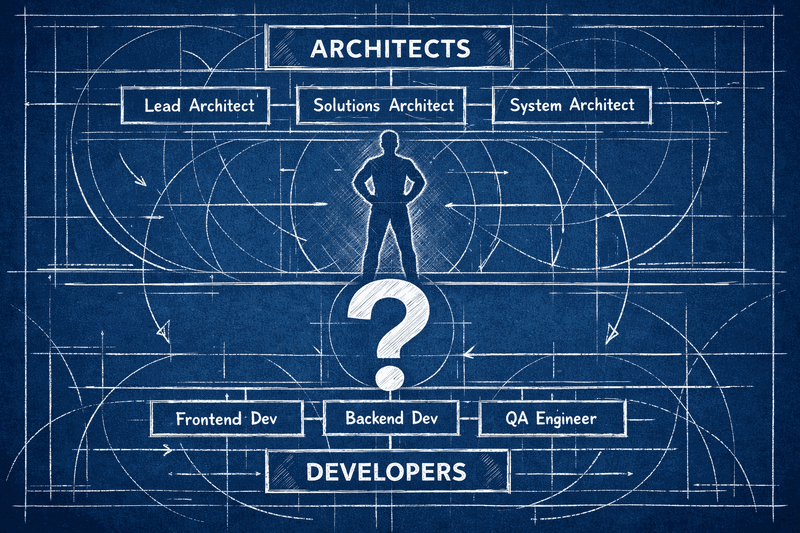
The space between approved software architecture and running systems is not empty - it requires translation, adaptation, and relationship maintenance. Yet this critical space remains unstaffed, filled only by informal roles that do not exist on any org chart. Understanding this design-delivery gap changes how we think about architecture adoption failures.
The Architecture That Everyone Approved and Nobody Built
I was part of a large enterprise architecture program at a government organization. We spent months developing a target architecture that sailed through multiple governance reviews. The architecture board gave unanimous approval. Stakeholders praised it as comprehensive and well-structured.
Six months into implementation, I conducted an informal review. What I discovered changed how I think about software architecture adoption forever.
Development teams had created their own interpretations of the approved architecture. Key integration patterns differed from what was approved. Domain boundaries had shifted. When I asked team leads why, they said: "The architecture document did not tell us how to implement this in our context."
My initial response was predictable - the architecture needed better documentation. More detailed specifications. Clearer diagrams. Implementation guidance. I produced additional artifacts and held additional briefings. The gap persisted.
Eventually I realized the problem was not documentation quality. The problem was structural: nobody owned the space between "approved" and "implemented." Architects had moved on to the next design. Developers were heads-down building. The translation from abstract architecture to concrete implementation decisions happened through informal hallway conversations with no consistency.

The Gap Nobody Staffs For
This pattern reveals what I call the Design-Delivery Gap - the structural space between approved architecture and implemented systems where translation, adaptation, and relationship maintenance must occur. Organizations consistently fail to staff for this space, leading to architecture that gets approved but never followed.
Think about it like construction. An architect designs a building. The blueprints get approved by the city. The construction company gets hired. But imagine nobody translates those blueprints into work orders, material lists, and sequenced tasks for the crew. The foreman gets handed architectural drawings and is expected to figure out the rest.
That would never happen in construction. The role between architect and crew is well-understood: project managers, site supervisors, construction managers. But in software architecture, this role is informal or absent. We would never build a building this way, yet we build systems this way routinely.

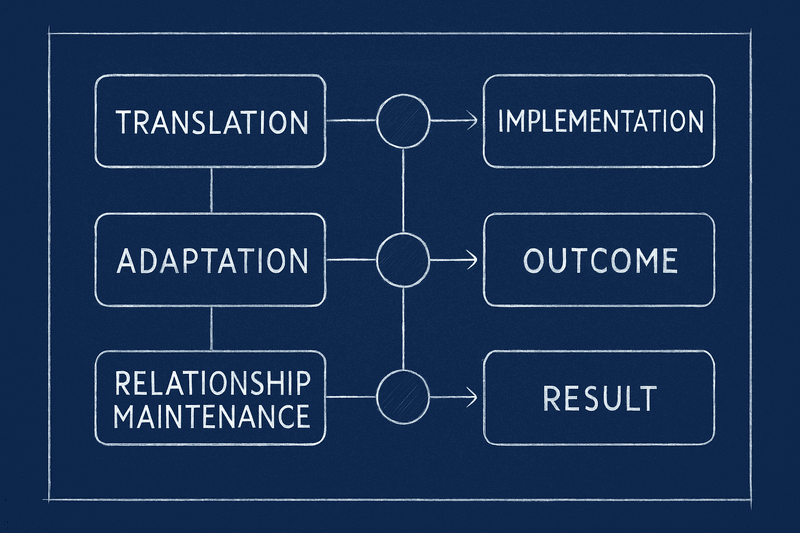
What happens in the Design-Delivery Gap? Translation work: converting abstract patterns into concrete implementation guidance. Interpretation work: adapting approved architecture to specific team contexts. Relationship maintenance: keeping implementation teams aligned with architectural intent over time.
The cost of leaving this gap unfilled is predictable. Architecture becomes shelfware. Teams improvise solutions. Technical debt accumulates. Architects get blamed for "poor communication" when the real issue is structural - we staffed for design and we staffed for build, but we did not staff for the space between.
The Invisible Roles That Fill the Gap
At a different organization, I encountered a technical lead with no formal architecture responsibility who kept showing up in architecture discussions uninvited. They would take architecture decisions and translate them into implementation patterns their team could follow.
This person was spending roughly thirty percent of their time on work that was not in their role description. Their manager questioned the time investment. From a formal perspective, this was somebody doing work that was not assigned to them.
Then this person went on holiday for three weeks. I watched what happened.
The team continued building but started making integration decisions that contradicted the approved architecture. When the technical lead returned, they spent two weeks correcting drift. The informal bridge role was invisible until it was absent.
This reveals the air traffic control principle. Pilots fly planes. Ground crews maintain them. Both are visible, recognized roles with clear job descriptions. But between takeoff and landing, someone coordinates the invisible space: air traffic control. Without ATC, pilots and ground crews still exist, planes still fly - but collisions become inevitable.
The Design-Delivery Gap is the airspace between architecture and implementation. Without someone controlling that space, collisions between design intent and implementation reality are inevitable.

The Informal Roles That Bridge the Gap
When the Design-Delivery Gap gets filled, it happens through informal roles that resist easy categorization. I have observed three primary patterns:
The Translator takes approved architecture and converts it into implementation guidance teams can actually follow. They speak both architectural concepts and implementation constraints. They produce the artifacts that should exist but do not: decision trees, implementation patterns, context-specific guidance.
The Adapter helps teams apply approved architecture to their specific contexts. They understand that enterprise architecture cannot be implemented identically across all teams. They negotiate the space between architectural consistency and team autonomy.
The Relationship Keeper maintains ongoing alignment between architectural intent and implementation reality. They catch drift early. They facilitate conversations between architects and developers. They prevent the slow degradation that happens when architecture and implementation evolve separately.
These roles share common characteristics. They operate on influence rather than authority. They spend significant time on work that is not formally assigned. They become single points of failure when they leave or get reassigned. They are invisible until they are absent.
The question is not whether these roles should be formalized. The question is whether organizations will recognize that the Design-Delivery Gap requires staffing, not just better communication.
One architecture leader I know, made this recognition explicit. He told me: "I sacrificed two architect positions in my team for a service delivery person and a workload manager." He traded design capacity for delivery capacity because he recognized the gap.
Thomas Willemsen captured the pattern perfectly: "That gap between design to delivery is usually terrible. It misses many actors. On great teams there are often glue people that step in or people doing multiple roles."
The most important role on your team might not be on your org chart.

Diagnosing Your Design-Delivery Gap
Here is how to diagnose whether your current project has this gap unfilled. Map the space between your last approved architecture and its implementation. Draw a timeline: when was architecture approved? When did the first implementation decision happen that should have followed architectural guidance?
Who translated architecture intent into implementation guidance during that timeline? If you cannot identify that person, or if the answer is "the architect sort of" or "the team leads figured it out," you have found your gap.
The Design-Delivery Gap is not a bug in your process. It is not a communication failure. It is a structural space that requires staffing. Organizations that recognize this and staff accordingly see higher architecture adoption rates. Organizations that ignore it see approved architecture become shelfware while teams improvise solutions.
Your software architecture program probably invests heavily in design capability - architects, frameworks, governance tools. It probably invests heavily in delivery capability - developers, infrastructure, deployment pipelines. The question is: who owns the space between approved and implemented?
If the answer is nobody, that is your diagnosis. The gap between approval and implementation had swallowed everything - not because the architecture was wrong, not because the teams were resistant, but because nobody was staffed to own the transition.
Resources
Watch the video for the complete stories behind this framework and how I discovered the Design-Delivery Gap in multiple organizations: Watch on YouTube
What invisible roles fill the Design-Delivery Gap in your organization? Who translates approved architecture into implementation reality, even though it is not in their job description?