Framework Overview: TOGAF ADM Phases A-E for Transformation
What Is TOGAF ADM (Really)?
Let me destroy the mystique around TOGAF: It's not a certification you need before doing architecture work. It's a structured approach to managing complexity when everything feels overwhelming.
The TOGAF Architecture Development Method provides nine phases for enterprise architecture work. For our DevOps transformation, we used five:
- Phase A: Architecture Vision - Aligning stakeholders on transformation goals
- Phase B: Business Architecture - Defining domain boundaries and team ownership
- Phase C: Information Systems Architecture - Designing application and integration architecture
- Phase D: Technology Architecture - Creating platform capabilities enabling autonomy
- Phase E: Opportunities and Solutions - Planning systematic migration and implementation
We skipped Phases F-H (Implementation Governance) because our scope focused on initial transformation design, not ongoing governance. The framework adapts to your reality—you're not obligated to use every phase.
The Three Rules That Actually Matter
After twelve months of transformation chaos, I distilled TOGAF implementation into three rules that prevent organizational meltdowns:
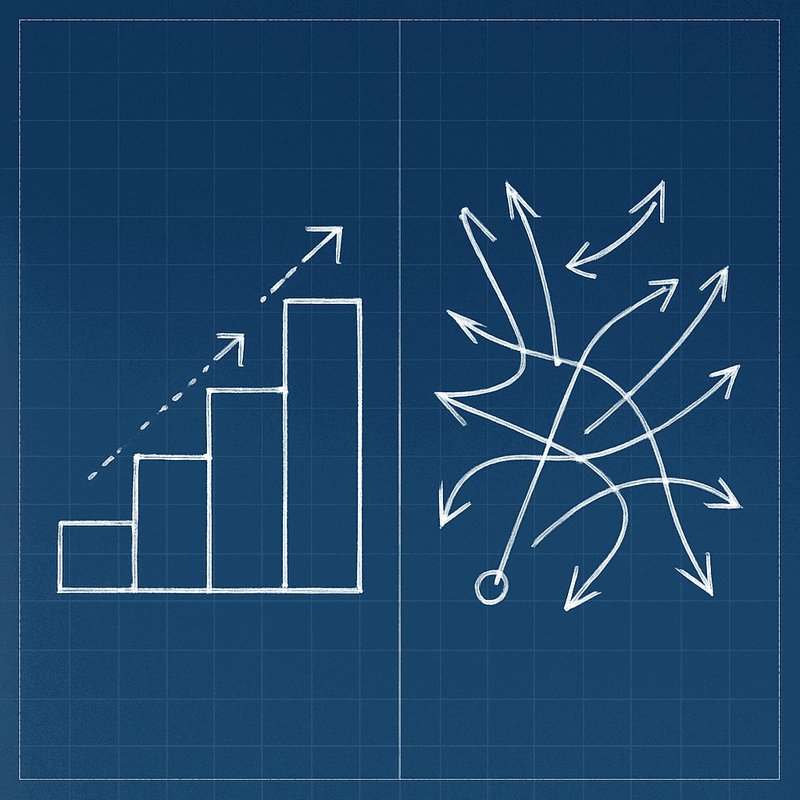
Rule 1: Phase Structure Rule
The Rule: Never do organizational change without a phase structure—otherwise you end up firefighting instead of building capabilities.
Why It Matters: Without phases, every stakeholder request feels equally urgent. With phases, you can say "that's Phase D work, we're currently in Phase B" and have meaningful conversations about sequencing.
When to Apply: Any time more than two teams need to coordinate changes, or when stakeholders can't agree on priorities.
Rule 2: Translation Rule
The Rule: Architecture documents exist to translate, not impress. If stakeholders don't understand it, it's not architecture—it's decoration.
Why It Matters: I once created a forty-seven page transformation document that nobody read. Then I created a six-page document that eliminated weeks of stakeholder debates. The difference? Translation focus.
When to Apply: Phase A (Architecture Vision) is entirely about translation. Create documents that speak multiple stakeholder languages, not comprehensive methodology overviews.
Rule 3: Ownership Boundary Rule
The Rule: Every cross-team capability must have exactly one owning team, or you're buying permanent coordination debt.
Why It Matters: "Shared responsibility" for cross-team capabilities means constant negotiation meetings. Single ownership means clear authority and documented interfaces.
When to Apply: Phase B (Business Architecture) when defining team boundaries and domain ownership. This one rule eliminated 80% of our coordination meetings.
When to Apply TOGAF ADM Phases
You need TOGAF ADM phases when:
- Multiple stakeholder groups have competing priorities and different success definitions
- Technical changes require organizational alignment across teams with different goals
- Complexity feels overwhelming and you're constantly firefighting random issues
- Teams can't agree on priorities and every decision triggers extensive debate
- Previous transformations failed due to scope creep and stakeholder chaos
You probably don't need TOGAF when:
- Single team working on bounded technical problem
- Clear stakeholder alignment and shared understanding of goals
- Simple technology upgrade without organizational impact
- Time constraints prevent structured approach (though this often backfires)
Implementation Methodology: The Five-Phase Playbook
Phase A: Architecture Vision - Diplomatic Translation (Weeks 1-3)
Timeline: 2-3 weeks
Stakeholders: All transformation participants
Deliverables: Architecture vision document, transformation scope, success metrics
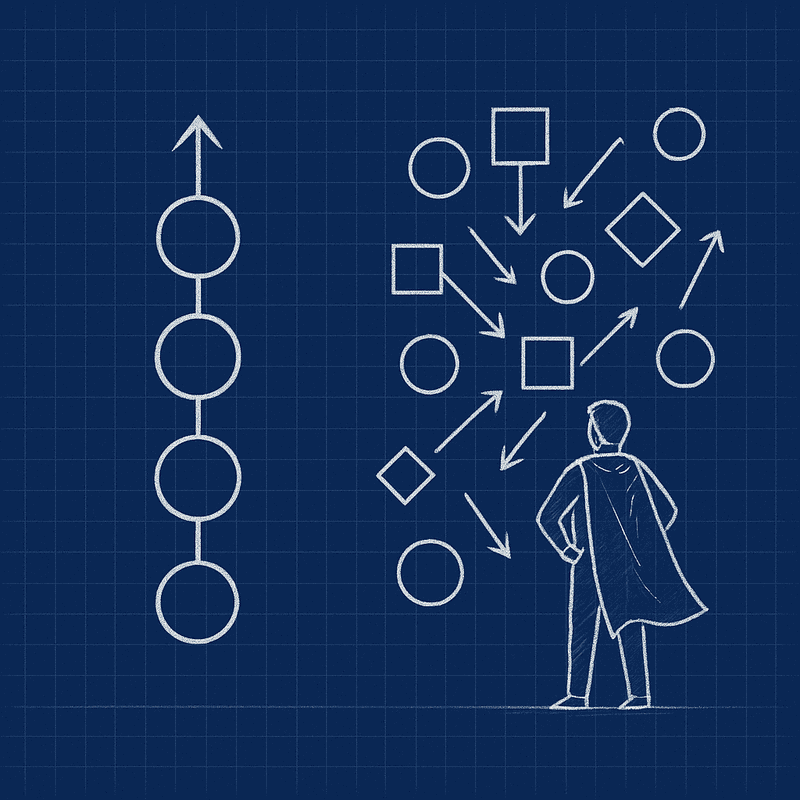
Step 1: Create Single-Page Before/After Visual
What: One visual showing current state versus target state after transformation.
How:
- Left side: Current bi-weekly manual release process with all bottlenecks visible
- Right side: Target continuous deployment with autonomous team operation
- Visual must be comprehensible in 30 seconds by non-technical stakeholders
Why: Pictures prevent endless debates about transformation goals. When ministry stakeholders and platform engineers both understand the same vision, you've achieved what forty pages of text never accomplish.
Common Pitfalls: Creating comprehensive process diagrams instead of simple before/after comparison. Complexity kills comprehension.
Step 2: Define Three Measurable Success Metrics
What: Three specific, measurable outcomes defining transformation success.
How (our transformation metrics):
1. Deployment Frequency: From bi-weekly to multiple times daily
2. Lead Time: From weeks to same-day releases
3. Mean Time to Recovery: From hours to minutes
Why: Measurable outcomes prevent scope creep. When stakeholders request additions, you can ask "does this contribute to these three metrics?"
Success Indicator: Every stakeholder group can explain how their work contributes to at least one of the three metrics.
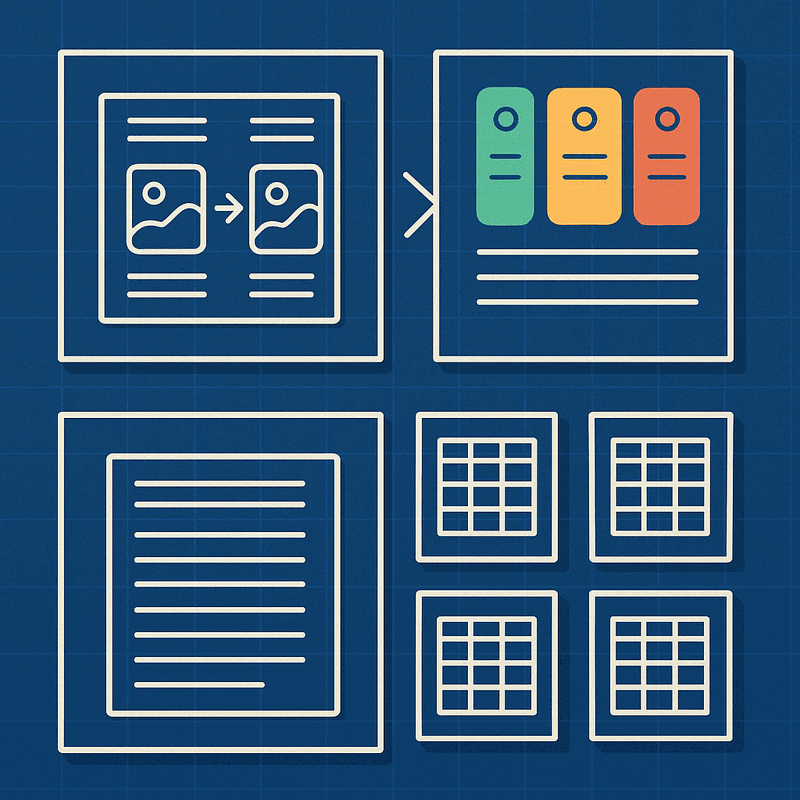
Step 3: Translate Vision for Four Stakeholder Languages
What: Create separate vision sections for each stakeholder group speaking their specific language.
How (our six-page document structure):
- Page 1: One before/after visual (universal)
- Page 2: Three success metrics (universal)
- Page 3: Ministry stakeholders—business agility and citizen service improvements
- Page 4: Platform management—stability roadmap and SLA definitions
- Page 5: Team leads—autonomy boundaries with explicit authority
- Page 6: Developers—specific tooling decisions and capability timelines
Why: This is the Translation Rule in action. Each stakeholder group reads their page, understands their role, and stops debating goals that don't affect them.
Critical Mistake I Made: I initially created one comprehensive document for "everyone." Nobody read it because it wasn't written for anyone specifically.
Phase B: Business Architecture - Eliminating Coordination Debt (Weeks 4-7)
Timeline: 3-4 weeks
Stakeholders: Development teams, product owners, business domain experts
Deliverables: Domain ownership matrix, team capability map, cross-team dependency inventory
Step 1: Apply the Ownership Boundary Rule
What: Assign every cross-team capability to exactly one owning team with clear decision-making authority.
How:
- Map all business domains in your organization
- Identify cross-team capabilities creating coordination overhead
- Assign single team ownership for each domain
- Document decision authority explicitly (who has final say on changes)
Why: "Shared ownership" creates permanent coordination debt through constant negotiation meetings. Single ownership enables clear interfaces and eliminates ambiguity about decision authority.
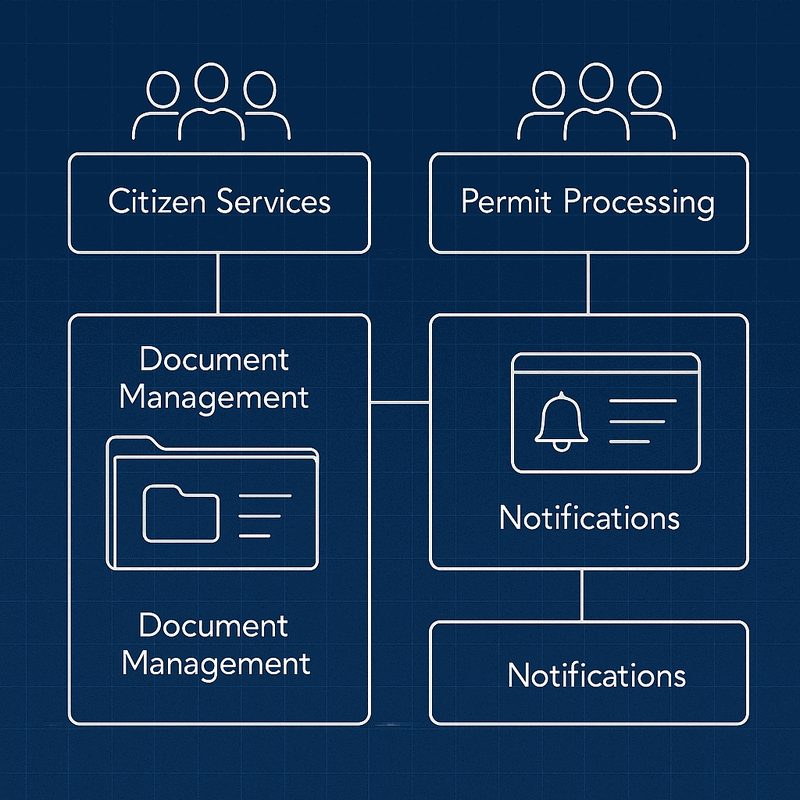
Our Transformation Assignments:
- Team A: Citizen services (all citizen-facing capabilities)
- Team B: Permit processing (complete permit lifecycle)
- Team C: Document management (all document handling)
- Team D: Notifications (all communication systems)
No shared responsibility. Clean boundaries. Zero ambiguity about who decides what.
Common Pitfalls: Allowing "collaborative ownership" without specifying who has final decision authority. Collaboration is great; ambiguous authority is organizational poison.
Step 2: Document Business Domain Interfaces
What: Define how business domains interact through specific, documented touchpoints.
How:
- Create interface contract templates specifying data flows between domains
- Document dependencies explicitly (Team B needs X from Team A)
- Establish communication protocols for interface changes
- Version all interfaces enabling independent evolution
Why: Documented interfaces eliminate constant "can you make this small change for us?" interruptions that plague teams with vague boundaries.
Success Metrics: We achieved 80% reduction in cross-team coordination meetings after implementing domain boundaries with documented interfaces.
Phase C: Information Systems Architecture - API Contract Reality (Weeks 8-12)
Timeline: 4-5 weeks
Stakeholders: Software architects, technical leads, API designers
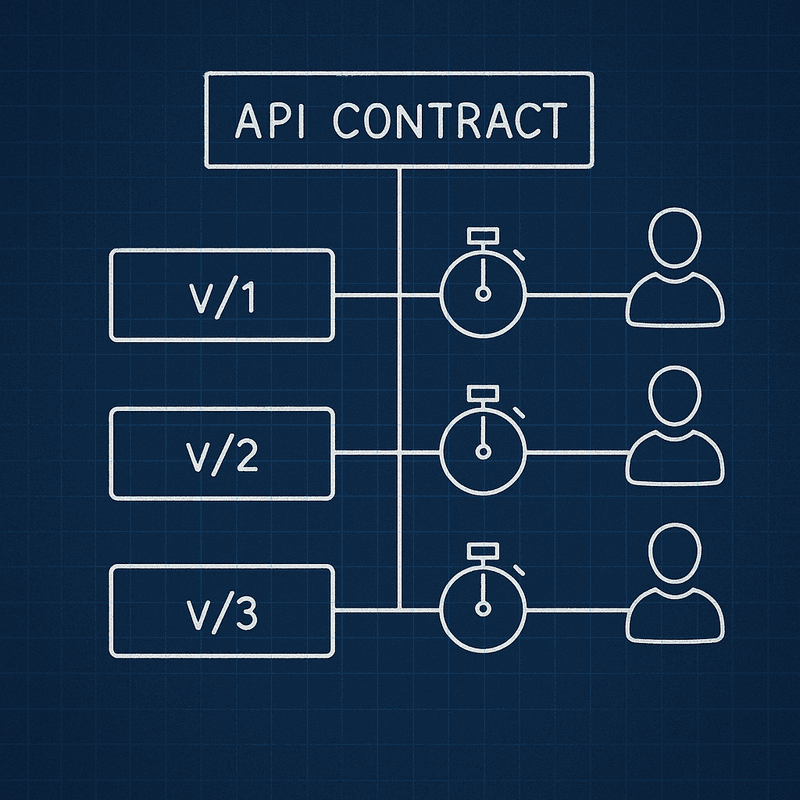
Deliverables: API contract specifications, integration patterns, versioning strategy
Step 1: Define Integration Contracts Between Domains
What: Specify exact API contracts for all cross-domain interactions with three non-negotiable requirements.
How (our three rules for every API):
1. Versioned endpoints: Every API must support versioning (v1/status, v2/status)
2. Performance requirements: Maximum response times documented and enforced
3. Single owning team: One team has final authority on API changes
Why: Vague integration agreements create constant renegotiation as requirements evolve. Written contracts enable independent team operation.
Permit Status API Example:
- Versioned endpoint: /api/v1/permits/status (mandatory versioning)
- Performance requirement: Maximum 200ms response time (enforced through monitoring)
- Single owning team: Team B has final authority (documented in interface specification)
No more "shared" responsibility creating decision paralysis when changes are needed.
Step 2: Organize Applications by Team Ownership
What: Restructure application portfolio mapping each application to single owning team with complete lifecycle responsibility.
How:
- Assign development, deployment, operations, and support to single teams
- Eliminate split responsibility requiring cross-team approvals for releases
- Document application ownership in accessible registry
Why: Split responsibility creates coordination overhead and accountability gaps. Teams can't operate autonomously if they need approvals from other teams for their application lifecycle.
Success Metrics: Teams deploying their applications independently without cross-team approvals was our primary Phase C success indicator.
Phase D: Technology Architecture - Platform Transformation (Weeks 13-18)
Timeline: 5-6 weeks
Stakeholders: Platform team, infrastructure engineers, security specialists
Deliverables: Self-service platform design, deployment automation specifications, monitoring strategy
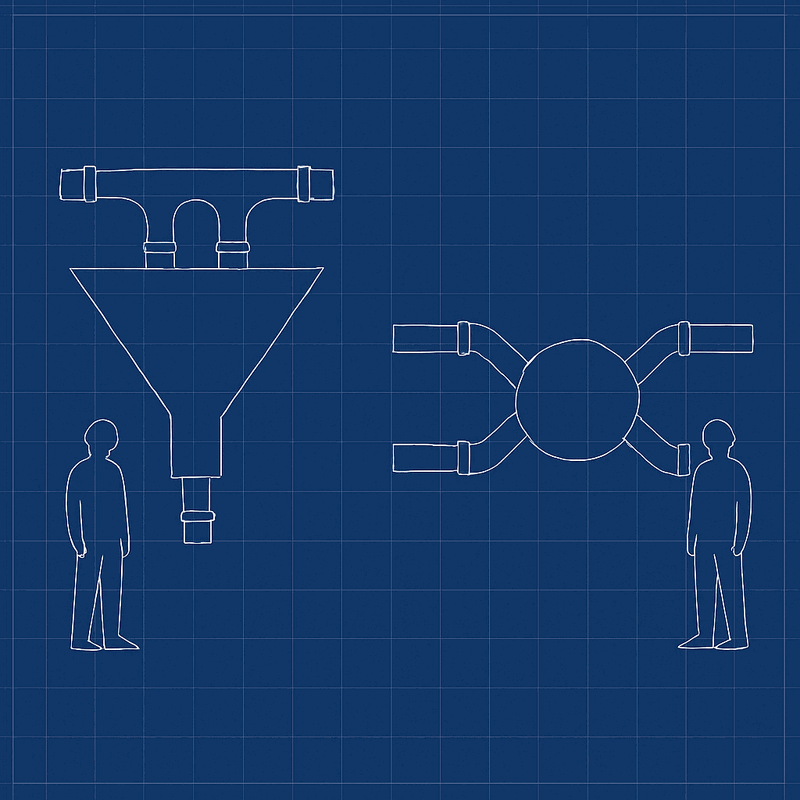
Step 1: Transform Platform from Bottleneck to Enablement
What: Replace manual platform team processes with automated self-service capabilities.
How (our four platform capabilities):
1. Container orchestration: Kubernetes-based autonomous deployment infrastructure
2. Automated pipelines: Customizable CI/CD workflows per team
3. Comprehensive monitoring: Operational visibility enabling team self-service
4. Enterprise security: Security frameworks spanning teams while enabling independence
Why: Platform teams become organizational bottlenecks when every team action requires manual intervention. Self-service transforms platform from blocker to enabler.
Common Pitfalls: Building "self-service" platforms that still require platform team approval for actual usage. True self-service means teams can operate independently within documented guardrails.
Step 2: Enable Team Autonomy Through Infrastructure
What: Provide infrastructure capabilities that actually support independent team operation, not just theoretical autonomy.
How:
- Self-service deployment systems eliminating approval bottlenecks
- Automated testing frameworks enabling confident releases
- Production monitoring dashboards providing operational visibility
- Documentation and training supporting capability transfer
Why: Telling teams they're "empowered" while keeping them dependent on platform team manual processes is organizational theater. Real autonomy requires technical capability.
Success Metrics: Teams deploying to production without platform team involvement proved our Phase D success.
Phase E: Opportunities and Solutions - Systematic Migration (Weeks 19-21 Planning)
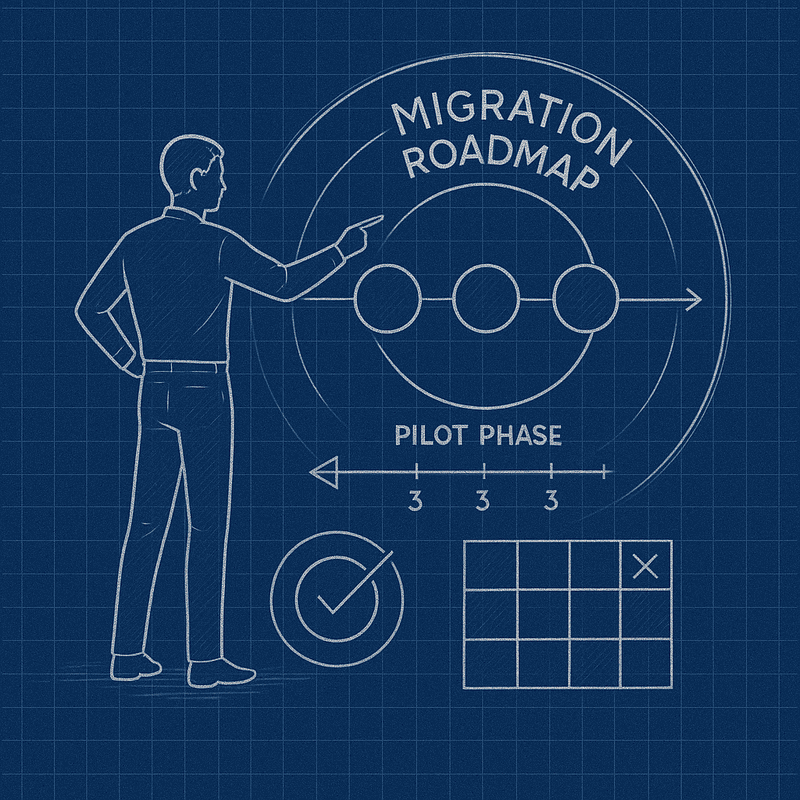
Timeline: 2-3 weeks planning, followed by 3-month pilot implementation
Stakeholders: All transformation participants, executive sponsors
Deliverables: Migration roadmap, pilot project plan, risk assessment, success criteria
Step 1: Plan Pilot Implementation
What: Select one team for initial transformation validating approach before organization-wide rollout.
How:
- Identify team with highest motivation for change
- Assess team's technical capability and transformation readiness
- Define clear success metrics for pilot period
- Establish three-month timeline with regular check-ins
Why: Organization-wide simultaneous transformation creates unmanageable risk and complexity. Pilot validates approach with manageable scope.
Our Pilot Selection: Team C volunteered first—they wanted autonomy most urgently and had moderate technical complexity. Three-month pilot with explicit metrics: deployment frequency increase, lead time reduction, incident response improvement.
Common Pitfalls: Selecting "easy" teams that don't validate real transformation challenges. Choose teams representing actual organizational complexity.
Step 2: Assess Technical and Cultural Risks
What: Document transformation risks across technology, organization, culture, and governance dimensions.
How:
- Risk workshops identifying specific failure modes
- For each risk: document likelihood, impact, mitigation strategy
- Create contingency plans for high-impact risks
- Establish monitoring for risk indicators during implementation
Why: Complex transformations fail from overlooked risks, not from known challenges. Systematic risk assessment prevents "surprise" issues.
Success Metrics: We achieved zero "surprise" issues during pilot—all problems were anticipated in our risk assessment workshops.
Step 3: Create Migration Sequencing
What: Define order and timeline for remaining team migrations after pilot success.
How:
- Prioritize based on business value, technical readiness, change capacity
- Sequence to manage dependencies (teams needing others' APIs migrate after API owners)
- Allocate support resources preventing simultaneous overload
- Build buffer time for learning from each migration
Why: Random migration order creates coordination chaos and competing resource demands. Systematic sequencing enables supportable transformation pace.
Real-World Application: Government Agency DevOps Transformation
Organizational Context
- Industry: Government digital services (national infrastructure scale)
- Team Size: 40+ technical staff across four development teams plus platform team
- Timeline: Twelve-month transformation from centralized to distributed deployment
- Challenge: Move from bi-weekly manual releases to continuous autonomous deployment
My Path Through the Transformation
Months 1-2: Architecture Vision and Stakeholder Warfare (Phase A)
The first six weeks felt like diplomatic warfare. Ministry stakeholders demanded faster feature delivery yesterday. Platform management needed guarantees about production stability that bordered on mathematical proofs. Development teams wanted immediate complete autonomy without accepting any responsibility. Leadership expected timeline compression that defied physics.
Every meeting descended into competing priorities. Technical decisions triggered endless debates. Nobody could agree on what "success" meant.
The Breakthrough: That six-page vision document I mentioned earlier. It translated one transformation into four different stakeholder languages. Ministry stakeholders saw business agility metrics. Platform got their stability roadmap with explicit SLA definitions. Team leads received autonomy boundaries with documented decision authority. Developers got specific tooling decisions and realistic capability timelines.
This wasn't comprehensive documentation—it was focused translation preventing weeks of circular debates. The document took me three days to write. It saved six weeks of meetings.
Lesson Learned: Translation Rule matters more than completeness. One well-targeted page beats ten comprehensive pages every time.
Months 3-4: Domain Boundaries and the Coordination Meeting Massacre (Phases B & C)
Applying the Ownership Boundary Rule eliminated 80% of coordination meetings. Previously, every cross-team capability required constant negotiation. Who owns the permit status API? "It's shared responsibility" meant neither team made decisions without extensive meetings involving everyone.
We forced single ownership assignments. Team B owned permit APIs completely. They made all decisions about functionality, performance, and integration patterns. Other teams consumed published interfaces. Contract violations went through Team B's formal change process, not informal hallway negotiations.
Integration contracts followed the same principle. For that critical permit status API:
- Versioned endpoint: /api/v1/permits/status (non-negotiable)
- Maximum 200ms response time: Enforced through monitoring with alerts
- Team B final authority: Documented in interface specification and organizational policy
Written. Enforced. Non-negotiable.
Application architecture mapping followed naturally. Each team controlled their applications' complete lifecycle. Integration happened through documented contracts, not constant coordination meetings.
The Pushback: Teams initially resisted clear boundaries. "But we collaborate!" Yes, collaboration is excellent. Ambiguous authority is organizational poison. Collaboration works best with clear ownership, not instead of clear ownership.
Quantitative Result: We measured coordination meeting time before and after domain boundaries. 80% reduction isn't hyperbole—it's documented meeting calendar analysis.
Months 5-7: Platform Revolution (Phase D)
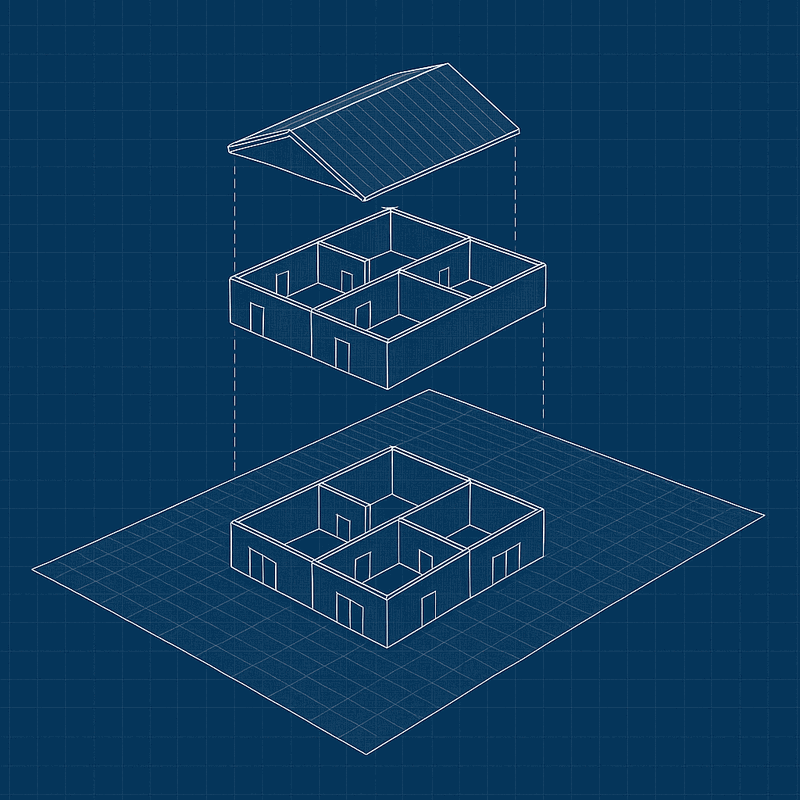
The platform team transformation changed everything about how we operated. Previously they acted as the only cashier during an eternal Black Friday—manually collecting deployment packages from four teams every two weeks.
We redesigned them as an enablement engine providing self-service capabilities:
Container Orchestration: Kubernetes infrastructure enabling autonomous deployment. Teams packaged applications in containers and deployed independently within documented guardrails.
Automated Pipelines: Each team customized CI/CD workflows for their applications. Platform team maintained pipeline templates; teams adapted to their needs.
Monitoring Systems: Comprehensive operational visibility. Teams monitored their own applications, identified issues independently, responded to incidents without platform team gatekeeping.
Security Frameworks: Enterprise security spanning all teams while enabling independence. Automated compliance checking, security scanning integration, documented security standards.
The critical insight? Team autonomy requires technical capability, not just organizational permission. You can tell teams they're "empowered" while keeping them completely dependent on platform team manual processes. Real autonomy came from self-service infrastructure.
Platform team metrics shifted dramatically. Before transformation: 100% time on manual deployment coordination. After transformation: 80% time on strategic capability building, 20% on exception handling.
Lesson Learned: Technology transformation follows naturally from business and information architecture work. When Phases B and C are complete, Phase D technical decisions become straightforward rather than contentious.
Months 8-10: Pilot Validation and Sequential Migration (Phase E)
Team C volunteered for the pilot—they wanted autonomy most urgently and understood they'd experience the most pain discovering transformation issues.
Three months of systematic validation. Clear success metrics tracked weekly:
- Deployment frequency: From bi-weekly to multiple times daily (achieved week 6)
- Lead time: From weeks to same-day releases (achieved week 8)
- Mean time to recovery: From hours to minutes (achieved week 10)
The pilot succeeded because we had completed Phases A through D properly. Domain boundaries were clear. Integration contracts were documented. Platform capabilities existed. Cultural expectations were aligned. Technology decisions followed naturally from business requirements.
Remaining team migrations happened sequentially over three months. Each team received customized training based on pilot learnings, dedicated support during transition, and clear success criteria. No surprises—all problems had been anticipated in Phase E risk assessment.
Team migration sequence: Team C (pilot), Team A (highest business value), Team D (moderate complexity), Team B (most complex integrations). Deliberate ordering managing dependencies and support capacity.
Results and Outcomes
Quantitative Results:
- Deployment frequency: From bi-weekly to multiple times daily per team
- Lead time: From weeks to same-day releases for 90% of changes
- Mean time to recovery: From hours to minutes through autonomous team response
- Coordination meetings: 80% reduction through clear domain boundaries
- Platform team capacity: 80% strategic work versus 100% operational firefighting
Qualitative Changes:
- Team satisfaction improved measurably (documented in team surveys)
- Platform team transformed from organizational bottleneck to strategic capability builder
- Stakeholder confidence increased through visible, measurable progress
- Ministry officials gained trust in technical team's transformation capability
Lessons Learned:
- Phases A and B matter more than perfect technology choices: Stakeholder alignment and domain boundaries create foundation for technical transformation success
- Translation documents prevent stakeholder chaos: Six pages of targeted translation beat forty-seven pages of comprehensive methodology
- Domain boundaries eliminate coordination meetings: Single ownership with documented interfaces reduced coordination overhead by 80%
- Self-service platforms enable real autonomy: Teams need technical capability, not just organizational permission
What I Would Do Differently
Start with even simpler Phase A documentation: Three pages instead of six. One visual, three metrics, one paragraph per stakeholder group. Less is more when translation is the goal.
Invest more time in Phase E risk assessment: We spent two weeks on risk workshops. Should have been three. The thoroughness prevented pilot surprises that would have undermined stakeholder confidence.
Create dedicated transition support team: We expected teams to figure out migration independently with documentation. Should have created small transition team supporting each migration actively for first month.
Stakeholder Feedback
From Development Teams: "Finally we can make decisions without waiting for three other teams to have meetings about our meetings."
From Platform Team: "We're actually building strategic capabilities instead of being the manual deployment bottleneck that everyone complains about."
From Ministry Stakeholders: "For the first time, we trust the technical organization to deliver what they promised when they promised it."

Implementation Checklist
Pre-Implementation Validation
- [ ] Identified all transformation stakeholders and their specific success definitions
- [ ] Created single-page before/after visual showing current versus target state
- [ ] Defined three measurable success metrics for transformation progress
- [ ] Secured executive sponsorship with explicit authority for architectural decisions
- [ ] Assessed organizational change capacity
During Implementation
- [ ] Weekly stakeholder communication preventing scope creep
- [ ] Documented all architectural decisions with context and rationale
- [ ] Maintained phase structure preventing chaotic firefighting
- [ ] Applied three rules consistently: Phase Structure, Translation, Ownership Boundary
- [ ] Monitored success metrics weekly
Post-Implementation Review
- [ ] Measured transformation outcomes against original success metrics
- [ ] Captured lessons learned for future transformations
- [ ] Updated frameworks based on real implementation feedback
- [ ] Documented what worked differently than expected
- [ ] Identified optimization opportunities
Related Frameworks and Extensions
Complementary Methodologies:
- SAFe (Scaled Agile Framework): Integrates with TOGAF for agile transformation at enterprise scale
- ITIL Service Management: Combines with TOGAF for operational capability design during Phase D
Advanced Applications:
- Complete ADM Cycle: Add Phases F-H for implementation governance when transformation extends beyond initial delivery
- Iterative Phase Application: Repeat Phases A-E for each transformation increment in complex multi-year initiatives
Next Steps & Resources
Your Implementation Plan
Week 1: Assessment
Identify one transformation in your organization that currently lacks phase structure and feels chaotic. This becomes your TOGAF ADM application target.
Week 2: Planning
Create simple Phase A vision document with one before/after visual and three success metrics. Focus on translating transformation goals into each stakeholder group's language.
Week 3-4: Pilot
Apply Ownership Boundary Rule to one cross-team capability experiencing coordination problems. Document single team ownership and interface contracts.
Success Indicators
You're on the right path when:
- Stakeholders stop debating transformation goals and start discussing implementation
- Coordination meetings decrease measurably (track meeting calendar time)
- Teams understand exactly what they own and what interfaces they consume
- Technical decisions happen faster with less stakeholder debate
If these don't happen, revisit Phase A translation work. The problem is usually stakeholder alignment, not technical approach.
Timeline Expectations
Realistic Progression:
- Phase A: 2-3 weeks for stakeholder alignment and vision documentation
- Phases B & C: 6-8 weeks for domain and application architecture design
- Phase D: 5-6 weeks for platform transformation planning
- Phase E: 2-3 weeks preparation plus implementation time
- Total: 6 months (small organizations) to 18 months (large enterprises)
This isn't rigid timeline—organizational complexity and change capacity affect duration. The key is maintaining phase structure, not hitting arbitrary dates.
Additional Resources
Further Reading:
- TOGAF Standard, Version 9.2 (The Open Group) - Official framework documentation
- "Enterprise Architecture as Strategy" by Ross, Weill, and Robertson
- "The Practice of Enterprise Architecture" by Svyatoslav Kotusev
Why These Specific Resources: They focus on practical EA implementation, not academic theory. Read them after starting your transformation so you have context for the concepts.
Professional Development:
- TOGAF 9 Certification for comprehensive framework understanding
- Enterprise Architecture professional communities for peer learning
- DevOps Institute certifications for transformation-specific expertise
Continue Your Journey
Watch the Full Story: See my complete transformation experience including the stakeholder battles and coordination chaos: TOGAF ADM Phases in Practice
Next Topic: Coming soon—TOGAF ADM Phases F-H applied to implementation governance and change management
The Truth About TOGAF and Transformation
Here's what I know to be true after twelve months of transformation chaos: TOGAF ADM phases aren't academic methodology requiring certification before application. They're practical survival tools for managing organizational complexity when everything feels overwhelming.
The three rules—Phase Structure, Translation, Ownership Boundary—work across contexts because they address fundamental challenges every enterprise architect faces: stakeholder chaos, coordination overhead, decision paralysis.
You don'eed comprehensive TOGAF training before applying these concepts. You need one transformation that's currently chaotic, these three rules, and willingness to structure complexity systematically.
Your next step: Pick one transformation in your organization. Create one-page before/after visual showing current versus target state. Add three measurable success metrics. Translate this for your stakeholder groups. That becomes your Phase A foundation.
Start there. The rest follows naturally when foundation is solid.
Think of exactly one interface between two teams in your world. Ask yourself: Who owns it? Is the contract written down anywhere? If the answer is "I don't know" or "sort of," that's your TOGAF opportunity.
About This Series: This post is part of the "JanisExplains Architecture" series on practical enterprise architecture implementation. I share real experiences from government, banking, aviation, and logistics transformations—no guru positioning, just frameworks that worked in specific contexts with honest acknowledgment that your mileage will vary.
Connect: Share your TOGAF transformation experience in the comments. What phase is hardest in your organization? What rule resonates most with your current challenges?