Introduction
A completed stakeholder matrix feels like progress. You have mapped every name, assessed influence levels, and documented a communication plan. Then the architecture stalls anyway, and the document sits in a shared drive as evidence of effort that produced no movement.
This article is for IT architects and senior developers who have experienced that gap between thorough preparation and actual organisational traction. It addresses a specific failure mode: treating stakeholder analysis as a deliverable rather than a starting point, and the discipline that replaces it.
This expands on my video about stakeholder momentum, where I walk through two real situations in which static stakeholder management produced the illusion of engagement while the architecture lost ground. The video covers the emotional experience of those moments. This article develops the diagnostic framework and the three-question momentum check in more depth, and adds implementation guidance you can apply before your next architecture review.
The shift from document to discipline is not a minor process adjustment. In my experience, it is the difference between an architecture that survives organisational pressure and one that gets quietly overturned in a meeting you were not invited to.
Why the stakeholder matrix stalls architecture work
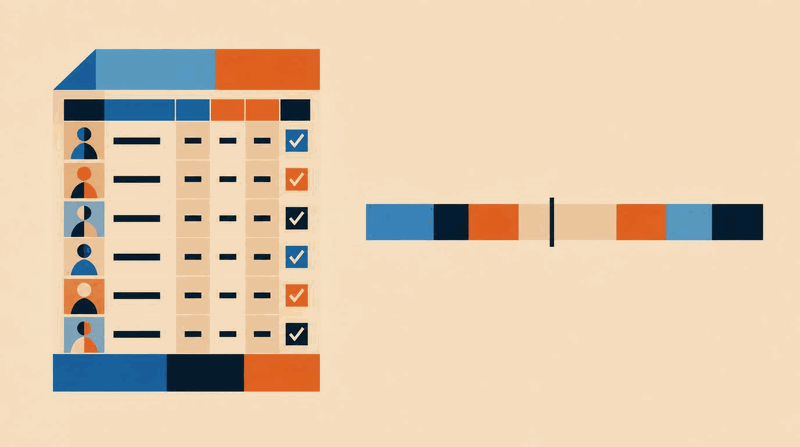
The stakeholder matrix is a legitimate tool for initial mapping. It forces systematic thinking about who is affected, who holds influence, and who has interest in an initiative. That structured thinking has genuine value, and I do not want to dismiss the tool before explaining precisely where it breaks down.
The breakdown is this: a stakeholder matrix captures position, not trajectory. It records where people stood at the moment you completed the analysis. It tells you nothing about where they are heading, what has changed in their organisational context since you last spoke, or whether the problem your architecture addresses has become more or less urgent to them in the past month. In most enterprise environments, those things shift constantly.
An initiative that runs for twelve months will move through at least two or three cycles of changing organisational priorities. Business leaders face new pressures. Restructures alter who holds influence. A problem that was background noise in the first quarter may be the thing keeping a senior leader awake by the third. A static map cannot track a moving landscape, and navigating by an outdated map produces the same result as navigating without one.
The psychological completion trap
The deeper problem is that producing a thorough stakeholder matrix creates a psychological sense of completion. The research took real effort. The communication plan was carefully tailored. The document is filed. The stakeholders are "managed." That sense of completion is accurate about the document and completely misleading about the stakeholders.
Managed is not the same as moving. A stakeholder who has been mapped, categorised, and assigned a communication frequency has not been engaged. They have been recorded. The distinction matters because architecture decisions do not get challenged in the documents that record stakeholder positions. They get challenged in conversations between business leaders that happen before the formal review, in corridor exchanges that never appear in any meeting record, and in rooms the architect does not attend.
If the only person who can defend an architectural decision is the architect, that decision is one missed meeting away from being overturned. The matrix cannot prevent that. Only activated advocates can.
The update cadence problem
Monthly matrix reviews compound the issue. In practice, a monthly review cycle means the stakeholder picture is always between one and five weeks out of date. Treating that review as "keeping the document current" is a different activity from understanding where stakeholders are actually heading. One produces an updated historical record. The other produces intelligence you can act on.
In my experience, the moment I shifted from monthly matrix updates to weekly individual conversations, the quality of information I had about stakeholder priorities changed entirely. Not because the conversations were long or structured, but because a single question, "what has changed in your world since we last spoke," consistently surfaced shifts that no document review would have caught.
Stakeholder momentum as a working discipline
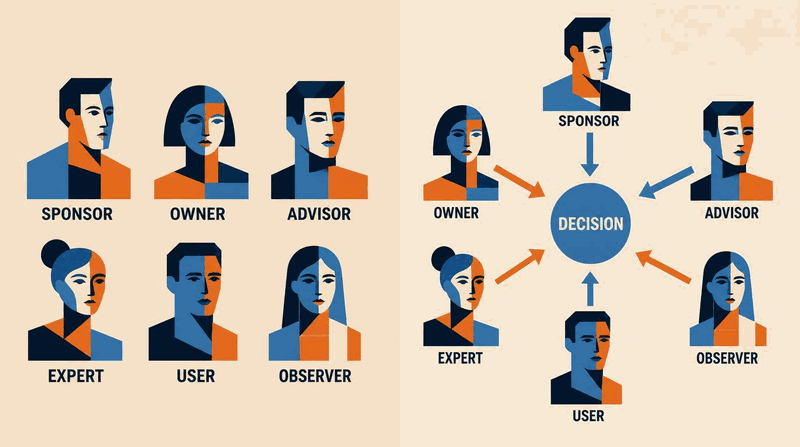
Stakeholder momentum is the discipline of converting identified stakeholders from static map entries into active forces that carry architectural decisions forward. The critical word is active. Not informed, not aligned, but active in the sense that they would advocate for the architecture in a conversation you are not part of.
The test for momentum is specific: would a key stakeholder explain the value of an architectural decision to a peer, without being prompted, without you being present? If yes, you have momentum with that stakeholder. If no, or if you genuinely do not know, you have a map entry. The distinction between those two states is the entire point of the discipline.
The three-question momentum check
I run a three-question check for every key stakeholder on a regular basis. The questions are simple, but answering them honestly requires that you have been having real conversations, not just sending status updates.
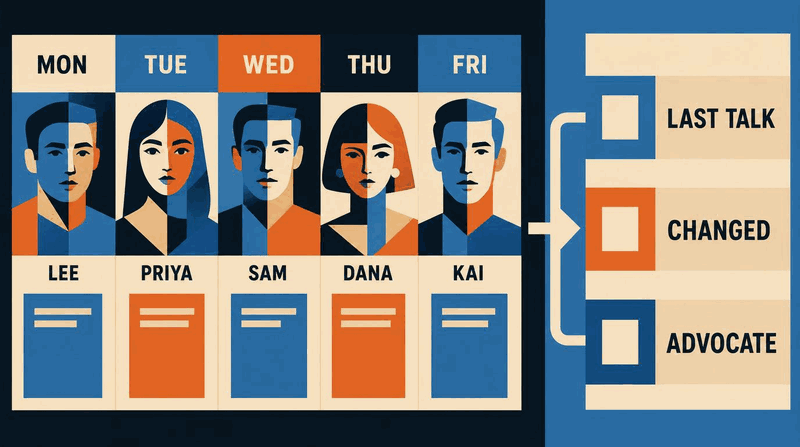
The first question is: when was the last direct, two-way conversation with this person? Not a presentation, not an email chain, but an actual exchange where they spoke and you listened. If the answer is more than three weeks ago, the relationship is cooling regardless of what the matrix says about their support level.
The second question is: what has changed in their world since that conversation? This is the trajectory question, and it is the one a static matrix never asks. Answering it requires that you asked during the conversation, and that you listened carefully enough to understand the implications for your architecture. If you cannot answer this question, you are navigating by an outdated picture.
The third question is: would this stakeholder explain the architecture's value to a peer without being asked? This is the momentum test. The answer is yes or no. If the answer is no, the stakeholder is mapped but not activated. Activating that entry is the work.
Building redundancy through multiple advocates
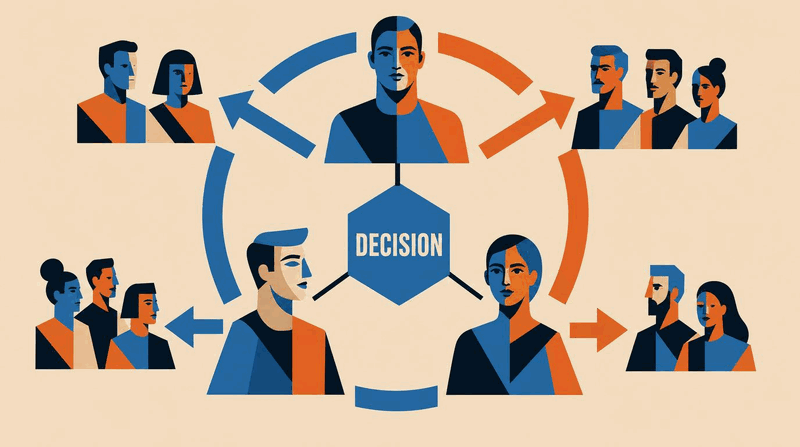
The goal is to have at least three stakeholders who would independently defend an architectural decision without you in the room. Three is not a magic number, but it represents a minimum for resilience. If you have one strong sponsor and they leave the organisation, take extended leave, or simply miss the meeting where the decision is challenged, your architecture is exposed. Three independent advocates means the architecture can survive your absence.
What makes an advocate genuinely independent is that they can articulate the value of the architecture in their own language, using their own framing, without needing you to translate. A stakeholder who supports the architecture but can only describe it in the terms you gave them is a relay, not an advocate. An advocate has internalised the value in a way that connects to their own priorities and their own professional context. Building that kind of understanding takes more than a presentation. It takes sustained conversation over time.
The weekly conversation rhythm
The practical mechanism that supports the momentum check is a weekly rhythm: one conversation per week with a different stakeholder, rotating through influence levels. The conversation has no agenda beyond the trajectory question. No architecture update, no status report, no presentation. Just a genuine inquiry into what has changed in their world and genuine listening to the answer.
In my experience, this rhythm produces two outcomes that no document-based approach can replicate. First, it surfaces shifts in stakeholder priorities early enough to respond to them. Second, it signals to stakeholders that you are interested in their context, not just in securing their support. That signal matters, because stakeholders who feel genuinely heard are far more likely to become advocates than stakeholders who feel managed.
The rhythm is not a significant time investment. A fifteen-minute conversation once a week, rotating through your key stakeholders, means each person hears from you roughly once a month. The difference from a monthly matrix review is that the conversation is bilateral and forward-looking rather than unilateral and retrospective.
Indirect engagement for resistant stakeholders
Not every stakeholder can be engaged through direct architecture conversations. Some have already formed a view based on previous initiatives: architecture equals overhead, documentation that does not solve real problems. When that pattern-match is in place, leading with architecture language triggers the frame before the content has a chance to land.
The approach I have used in those situations is to engage through the stakeholder's own problem rather than through the architecture. If a senior leader's team has a coordination problem that is structurally identical to something the architecture already addresses, offering to facilitate a working session on that coordination problem, using the leader's language and framing, creates a path to engagement that direct architecture conversation would have closed.
The working session does not introduce architecture terminology. It asks questions, reflects back what participants are saying, and lets the team map their own dependencies. After the session, privately showing the leader how the whiteboard output aligns with the architecture model demonstrates value through the leader's own team's work rather than through the architect's presentation of it.
In my experience, indirect engagement is not a workaround for difficult stakeholders. It is often the most honest form of engagement available in enterprise architecture, because it requires the architecture to prove its value in the stakeholder's world rather than asking the stakeholder to accept your framing of their world. The patience required to sit in a room facilitating a conversation about a problem you have already solved, without revealing that you have solved it, is real. The outcome, a stakeholder who becomes an advocate because the architecture addressed a problem they already cared about, is qualitatively different from a stakeholder who supports the architecture because they were persuaded.
Implementing stakeholder momentum in practice
The momentum check is most useful when it produces a specific action rather than a general assessment. Running the three questions for your five most critical stakeholders should result in a list of conversations you need to have this week, not a revised document about stakeholder status.
Start by identifying the three stakeholders whose advocacy is most critical to the next decision your architecture faces. For each one, write down the date of the last real conversation, what you know has changed in their world since then, and whether they would defend the decision without you present. If you cannot answer the second question, that is the conversation you need to have first.
Common pitfalls
The most common mistake is treating the momentum check as a new form of documentation rather than a trigger for action. If the output of running the three questions is an updated spreadsheet rather than a calendar entry for a conversation, the discipline has been converted back into a matrix.
A second pitfall is conflating meeting attendance with engagement. A stakeholder who attends every architecture review and asks no questions is not an activated advocate. They are a passive observer. The momentum check is specifically designed to distinguish between those two states, but only if you answer the third question honestly rather than optimistically.
A third pitfall is applying indirect engagement as a manipulation tactic rather than a genuine inquiry into stakeholder problems. The working session approach works because it is genuinely useful to the stakeholder's team. If the facilitation is a performance designed to engineer a predetermined conclusion, stakeholders will sense it, and the result will be the opposite of momentum.
Success indicators
The measure of the discipline is behavioural, not documentary. You are making progress when a key stakeholder references the architecture in a meeting you did not attend. You are making progress when a business leader explains an architectural decision to a peer in business terms without prompting. You are making progress when a challenge to an architectural decision is answered by someone other than you before you have a chance to respond.
These indicators are observable if you are paying attention. They do not require a metrics framework. They require that you have built enough of a network that information about what is being said about the architecture reaches you through channels other than formal reviews.
Architecture decisions are social decisions first
The shift from document to discipline changed the outcomes I was able to produce as an architect. Not because the discipline is more sophisticated than a stakeholder matrix, but because it measures the right thing. The matrix measures how thoroughly you have mapped the landscape. The momentum check measures whether the landscape is moving in the direction your architecture needs.
The larger principle behind this is one I keep returning to: architecture decisions are social decisions before they are technical ones. The best model in the world does not move if the people who need to carry it forward have not been genuinely engaged. Stakeholder management is not a soft skill that sits alongside the technical work. It is the mechanism that determines whether the technical work survives contact with the organisation.
Before your next architecture review, run the momentum check for your three most critical stakeholders. Write down the last date of a real conversation, what you know has changed in their world, and whether they would defend the decision without you present. You will have three honest assessments and, very likely, at least one conversation you know you need to have this week.
Your mileage may vary on the specific cadence, the number of advocates you need, and the approach to indirect engagement. These are patterns from my experience, not universal prescriptions. What I would ask is this: how many people on your stakeholder map would speak up for your architecture in a room you are not in? If you cannot name three, that is where the work starts.
Share in the comments which of the three momentum questions is hardest to answer honestly for your current initiative. I am curious whether the trajectory question or the advocacy test is the one that surfaces the most uncomfortable gaps.