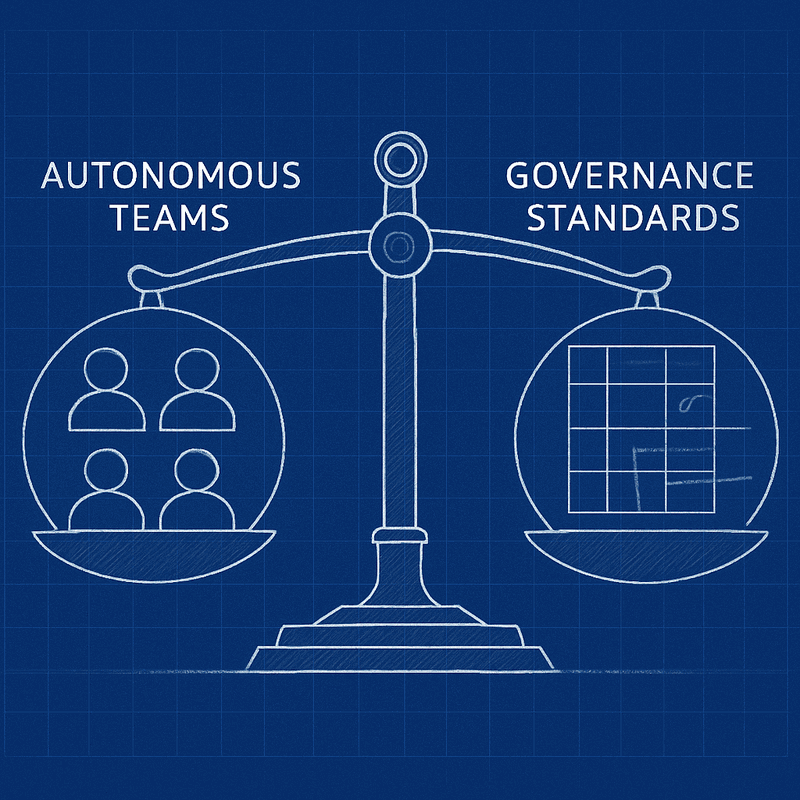
This expands on my video about resolving the team autonomy versus enterprise governance paradox through domain ownership principles. If you are a solution architect, application architect, or technical lead dealing with endless coordination meetings and API ownership arguments, this framework will transform how your teams operate.
The core insight: teams that own business capabilities end-to-end make better architectural decisions than teams sharing technical responsibilities. This principle eliminates most coordination overhead while maintaining enterprise coherence.
The Coordination Crisis in Modern Development
Every enterprise faces the same fundamental tension. Development teams demand autonomy to move fast and make technical decisions. Enterprise architecture requires coherence across systems and consistent governance. Traditional approaches fail because they treat this as an either-or choice.
Central control kills team productivity. Every technical decision requires approval. Teams wait for architecture committees. Innovation stops. But complete team independence creates chaos. Systems cannot integrate. Security becomes inconsistent. Enterprise coherence disappears.
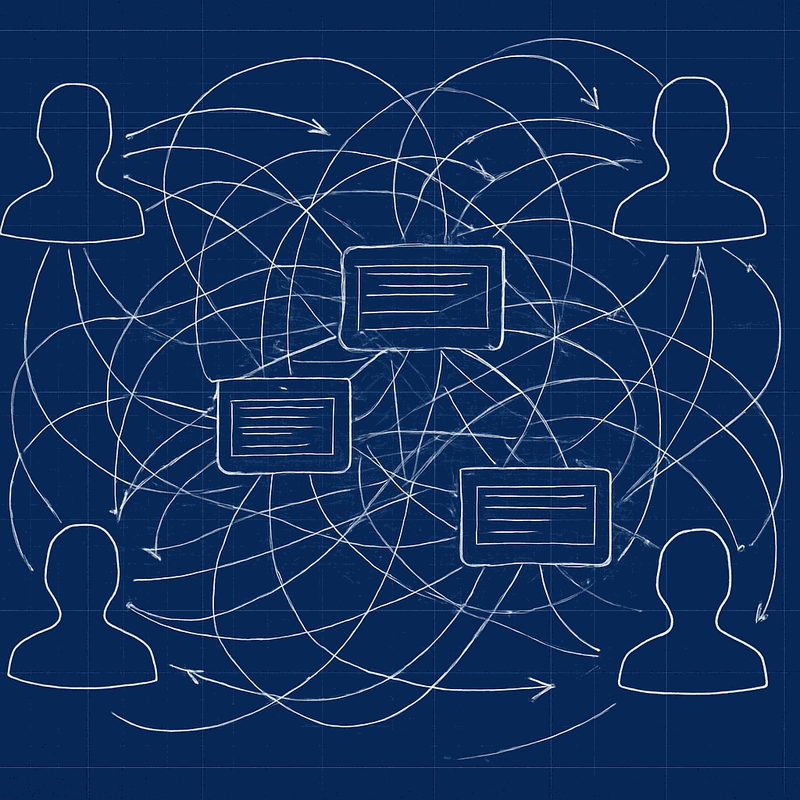
The real problem is not the tension between autonomy and governance. The problem is how we organize teams and define boundaries. Most organizations structure teams around technical convenience rather than business value. This creates artificial dependencies and coordination overhead.
When teams share responsibility for business capabilities, nobody owns the outcome. When multiple teams touch the same API, ownership becomes ambiguous. When technical boundaries cross business domains, coordination becomes mandatory.
Domain Ownership: The Systematic Solution
Domain ownership resolves this paradox by organizing teams around business capabilities rather than technical layers. Each team owns a complete business domain end-to-end. They own the applications, the data, the APIs, and the business outcomes within their domain.
This is not just microservices architecture. This is organizational architecture aligned with business architecture. Teams become accountable for business capabilities, not just code delivery.
The transformation happens through three core principles:
Clear Domain Boundaries: Each business capability maps to exactly one team. No shared ownership. No ambiguous responsibilities. Teams know what they own and what they do not own.
End-to-End Ownership: Teams own the full stack within their domain. Database, APIs, user interfaces, monitoring, security implementation. They own the consequences of their technical decisions.
Integration Through Standards: Governance focuses on how domains connect, not how teams implement internally. Shared data models, API design principles, security patterns. Teams choose their technology stacks and development methodologies.
The framework creates natural accountability. Teams invest in application quality because they own the operational consequences. Cross-domain integration becomes reliable because interfaces are designed systematically rather than negotiated repeatedly.
Real-World Implementation: The Four-Month Transformation
Working as a solution architect on national-scale government systems, I managed four development teams across twenty-five applications. Every sprint planning devolved into arguments about API ownership. Cross-team coordination meetings dominated calendars. Feature delivery slowed as coordination overhead increased.
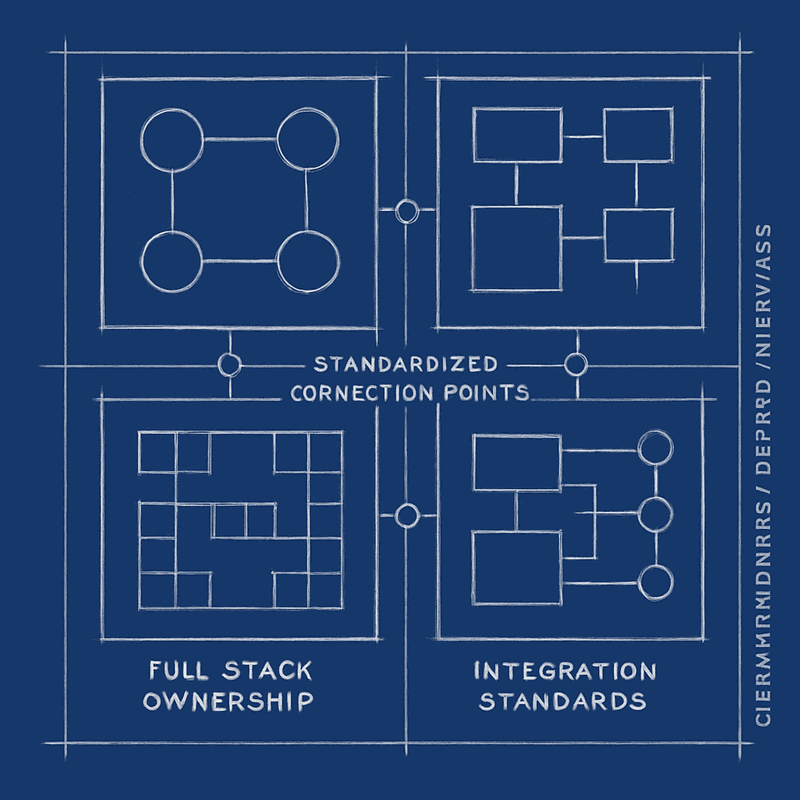
The breakthrough came from applying domain-driven design to organizational structure, not just code architecture. Instead of organizing teams by technical layers or application boundaries, we reorganized around business domain ownership:
- Authorization Domain Team: Authentication, delegation, access control across all applications
- Processing Domain Team: Submission workflows, status tracking, business process execution
- Collaboration Domain Team: Messaging, notifications, external system integration
- Rules Domain Team: Validation logic, approval workflows, compliance checking
Each team gained end-to-end ownership of their business capability across multiple applications. The authorization team owned user management whether it appeared in the web portal, mobile app, or batch processing system. The processing team owned workflow logic regardless of which application triggered it.
The results were immediate and measurable:
- 60% reduction in cross-team coordination meetings
- 40% faster feature delivery cycles
- Clear accountability for business capability performance
- Teams operated independently 90% of the time
The lesson: better boundaries eliminate the need for coordination rather than requiring more coordination processes.
Governance Through Integration Standards
Six months into implementation, we needed sustainable governance that preserved team autonomy while ensuring enterprise coherence. Traditional enterprise governance was killing productivity by controlling implementation details. Teams resisted governance as overhead rather than enablement.
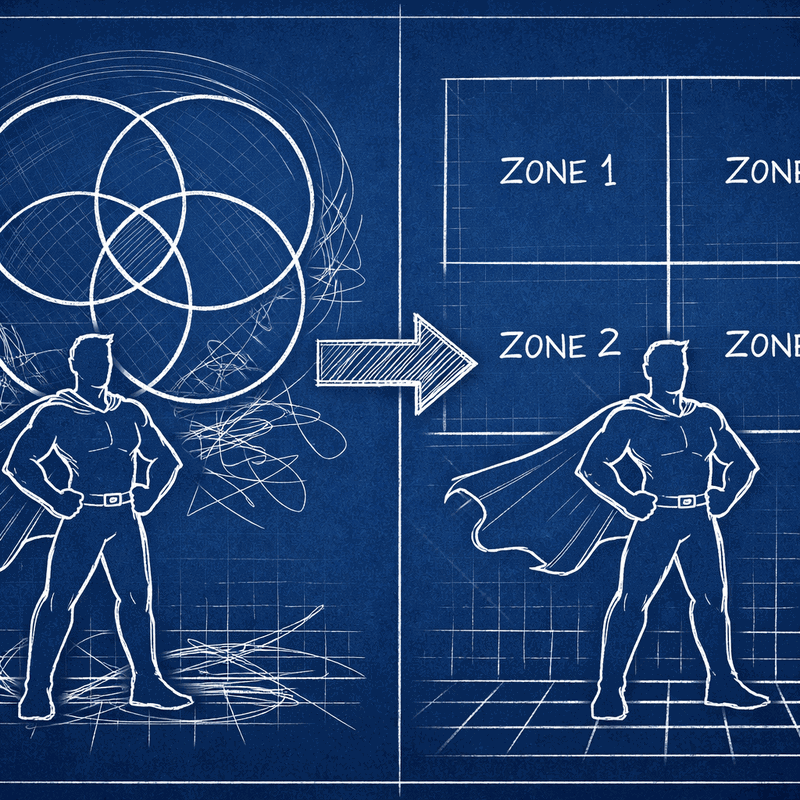
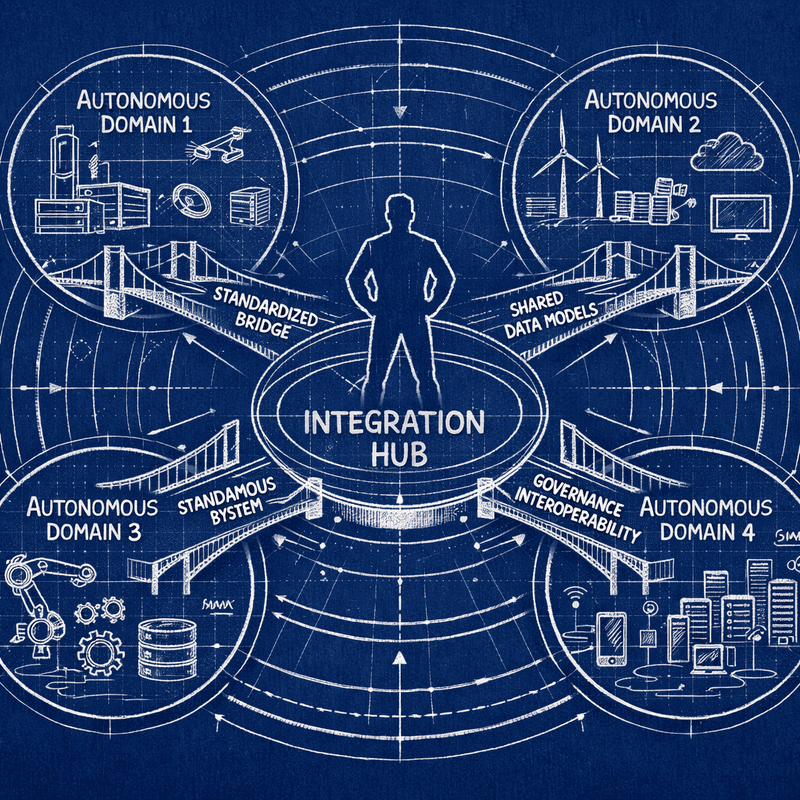
The solution was shifting governance focus from implementation control to integration enablement. We defined standards for how domains connect while letting teams control how they implement internally.
Integration Standards We Defined:
- Shared data models for cross-domain information exchange
- API design principles enabling service evolution without breaking changes
- Security patterns applied consistently across all domain boundaries
- Platform services providing common capabilities (monitoring, logging, deployment)
Implementation Freedom We Preserved:
- Technology stack choices within domains
- Development methodology and process decisions
- Database design and data management approaches
- Deployment timing and release processes
This governance model worked because it aligned with natural team incentives. Teams wanted reliable integration with other domains. They welcomed standards that made cross-domain communication predictable. But they resisted control over internal implementation because it slowed their delivery.
Enterprise coherence improved through team autonomy rather than despite it. Teams invested in application quality because they owned the consequences. Cross-domain integration became reliable because interfaces were designed systematically rather than negotiated case-by-case.
Platform Team Evolution: From Control to Capability
Twelve months into the transformation, the platform team role needed redefinition. They had become a deployment bottleneck, controlling rather than enabling team autonomy. Every deployment required platform team approval. Infrastructure changes went through lengthy approval processes.
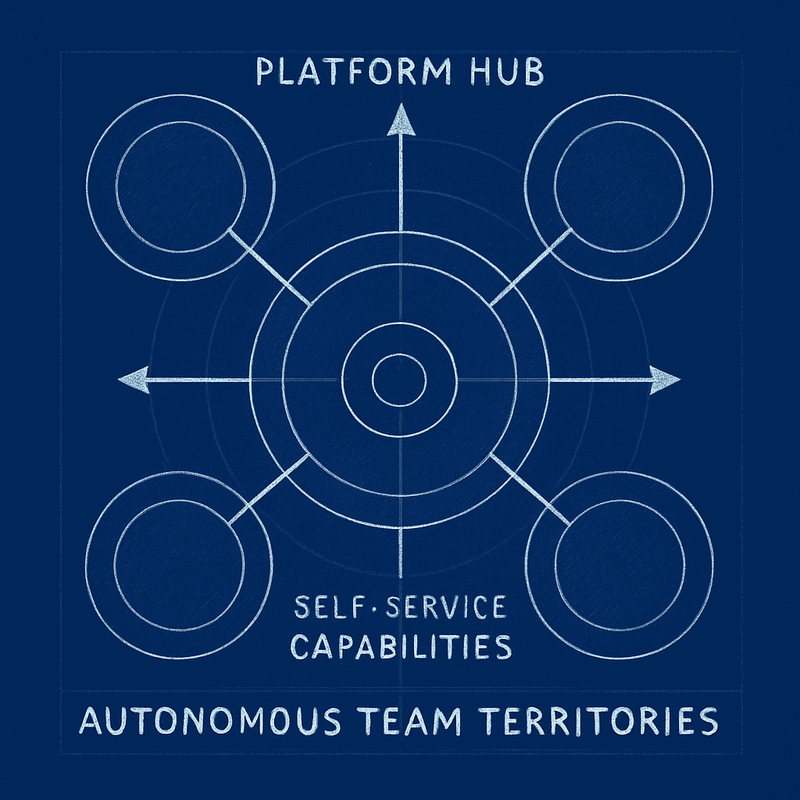
The platform team shifted from control to self-service capability provision:
Container Orchestration Platform: Teams could deploy domain-specific applications without platform team involvement. Standardized deployment patterns with domain-specific customization options.
Monitoring and Observability Services: Teams gained operational visibility into their domain performance. Platform provided the infrastructure, teams owned the metrics and alerting for their business capabilities.
Database Services: Teams could provision and manage databases for their domains. Platform provided the underlying infrastructure and backup services, teams controlled schema design and data management.
This transformation happened through architectural patterns rather than organizational mandates. Teams gained capability through better tools and clearer boundaries. The platform team became a force multiplier rather than a bottleneck.
Cultural transformation followed architectural transformation. Teams took ownership of operational concerns because they had the tools and authority to address them. Business value delivery improved because coordination overhead disappeared.
The Symphony Orchestra Analogy
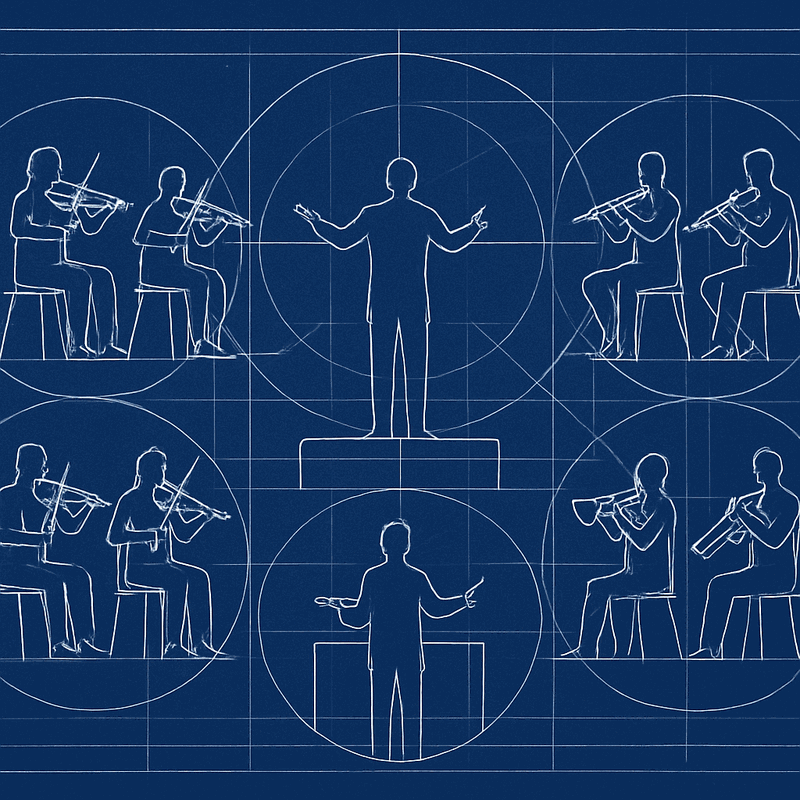
Team autonomy versus enterprise governance resembles conducting a symphony where every musician wants creative freedom while creating beautiful music together. The solution is not micromanaging every note or allowing complete chaos.
Each orchestra section owns their musical domain. Violins own the melody lines. Brass owns the harmonic foundation. Percussion owns the rhythmic structure. They have creative freedom within their domain but follow integration standards: shared tempo, key signature, and dynamic markings.
The conductor is not making real-time implementation decisions. The conductor established the integration standards during rehearsal. During performance, the sections coordinate through those standards rather than constant communication.
In software architecture, the integration standards function as the conductor. Shared data models, API design principles, and security patterns enable coordination without constant communication. Teams operate autonomously within their business domains while maintaining enterprise coherence through standardized interfaces.
This analogy breaks down when we consider that orchestras have a human conductor making real-time adjustments. In software systems, the integration standards themselves provide the coordination mechanism. This makes domain boundary design even more critical because the boundaries must be sustainable without constant human intervention.
Implementation Framework: From Chaos to Clarity
Implementing domain ownership requires systematic business capability mapping and team reorganization. This is not a technical exercise. This is business architecture applied to organizational design.
Step 1: Business Capability Identification
Map your applications to business capabilities rather than technical functions. Ask: "What business outcome does this application serve?" Group applications that serve the same business capability regardless of their technical architecture.
Step 2: Domain Boundary Design
Define clear ownership boundaries between business domains. Each domain should have minimal dependencies on other domains for normal operation. Cross-domain integration should happen through well-defined interfaces, not shared databases or internal APIs.
Step 3: Team Assignment and Accountability
Assign one team per business domain with end-to-end ownership. The team owns applications, data, APIs, and business outcomes within their domain. They are accountable for domain performance, not just code delivery.
Step 4: Integration Standards Definition
Define standards for cross-domain communication while preserving implementation autonomy. Focus on data models, API design principles, security patterns, and platform services. Let teams choose technology stacks and development processes.
Step 5: Governance Model Alignment
Shift governance from implementation control to integration enablement. Measure team performance by business capability outcomes, not technical compliance. Support teams through platform services and shared standards rather than approval processes.
This framework scales because it aligns organizational structure with business value delivery. Teams understand their accountability. Coordination happens through designed interfaces rather than constant communication. Enterprise coherence emerges from consistent integration patterns rather than central control.
Measuring Success: Beyond Technical Metrics
Domain ownership success appears in coordination reduction, not just technical improvements. Traditional metrics miss the organizational transformation that enables sustainable delivery.
Coordination Metrics:
- Cross-team meeting frequency and duration
- API ownership dispute resolution time
- Feature delivery cycle time from concept to production
- Team independence ratio (percentage of work requiring no external coordination)
Business Capability Metrics:
- End-to-end business capability performance
- Domain-specific user satisfaction scores
- Business outcome delivery against domain objectives
- Cross-domain integration reliability and performance
Team Autonomy Indicators:
- Technology stack diversity across domains
- Deployment frequency per domain team
- Time from development to production within domains
- Team satisfaction with decision-making authority
The most important indicator is when teams stop asking for permission and start taking ownership. When coordination meetings become rare rather than routine. When API ownership disputes disappear because ownership is clear.
Common Implementation Challenges and Solutions
Challenge: Existing Application Dependencies
Many applications have deep technical dependencies that cross business domain boundaries. Untangling these dependencies takes time and careful planning.
Solution: Gradual Domain Extraction
Start with new features and applications. Apply domain ownership to greenfield development while gradually extracting domain-specific functionality from legacy applications. Create clear interfaces between domains even when applications remain technically coupled initially.
Challenge: Team Resistance to Full Ownership
Teams may resist taking operational responsibility for their domains. They prefer development-only roles without production support obligations.
Solution: Capability Building and Support
Provide platform services that make operational responsibility manageable. Invest in monitoring, deployment automation, and self-service infrastructure. Make operational excellence achievable rather than overwhelming.
Challenge: Enterprise Architecture Team Concerns
Enterprise architects may resist reduced control over implementation decisions. They worry about inconsistency and technical debt across domains.
Solution: Governance Through Integration Standards
Demonstrate that enterprise coherence improves through better integration rather than implementation control. Focus architecture team efforts on cross-domain standards and platform capabilities rather than domain-internal decisions.
Conclusion
The team autonomy versus enterprise governance paradox resolves through domain ownership principles. Teams that own business capabilities end-to-end make better architectural decisions than teams sharing technical responsibilities.
This transformation requires organizational architecture, not just software architecture. Map applications to business capabilities. Assign clear domain ownership. Define integration standards while preserving implementation autonomy. Shift governance from control to enablement.
The results speak for themselves: 60% reduction in coordination overhead, 40% faster delivery, 90% team independence. Enterprise coherence through team autonomy rather than central control.
Your coordination nightmares are not inevitable. They are symptoms of misaligned boundaries and shared responsibilities. Domain ownership provides the systematic solution that scales with your organization.
Watch the video for the personal stories behind this transformation: https://www.youtube.com/watch?v=ITpSo-1Ftp8
What business capability does your biggest coordination challenge serve, and which teams are currently sharing responsibility for it?
Resources
- Video: https://www.youtube.com/watch?v=ITpSo-1Ftp8
- Related: TOGAF ADM Phase B (Business Architecture) and Phase C (Information Systems Architecture)
- Framework: Domain-Driven Design applied to organizational structure
Watch the video for the personal stories behind this framework: https://www.youtube.com/watch?v=ITpSo-1Ftp8
What business capability does your biggest coordination challenge serve, and which teams are currently sharing responsibility for it?